

AI Demand Is Strong. AI Budget Control Is Still Catching Up.

Near-universal AI adoption is colliding with weak cost governance, and the overruns are reshaping IT budgets.
Key Takeaways
-
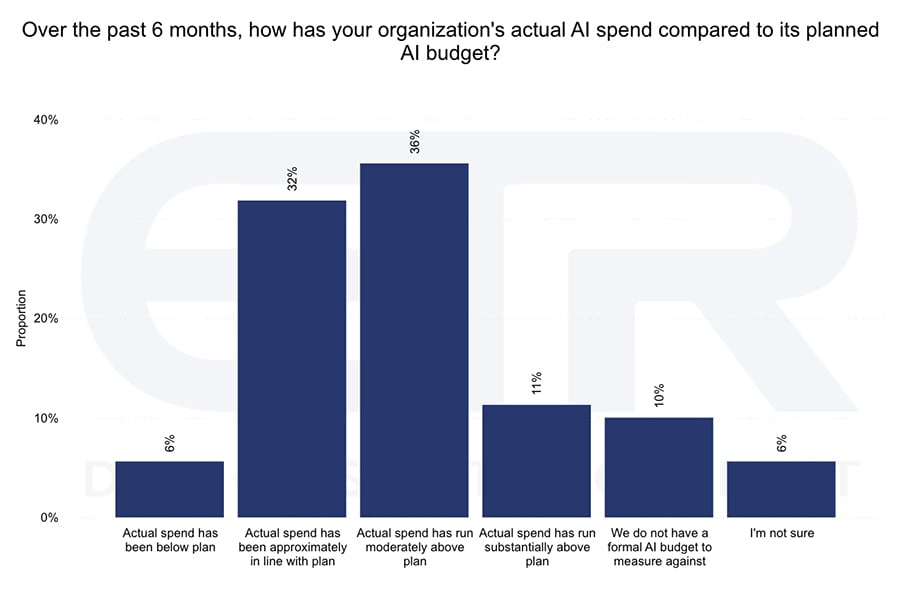
47% of organizations report AI spending moderately or substantially over plan, and 10% have no formal AI budget at all.
-
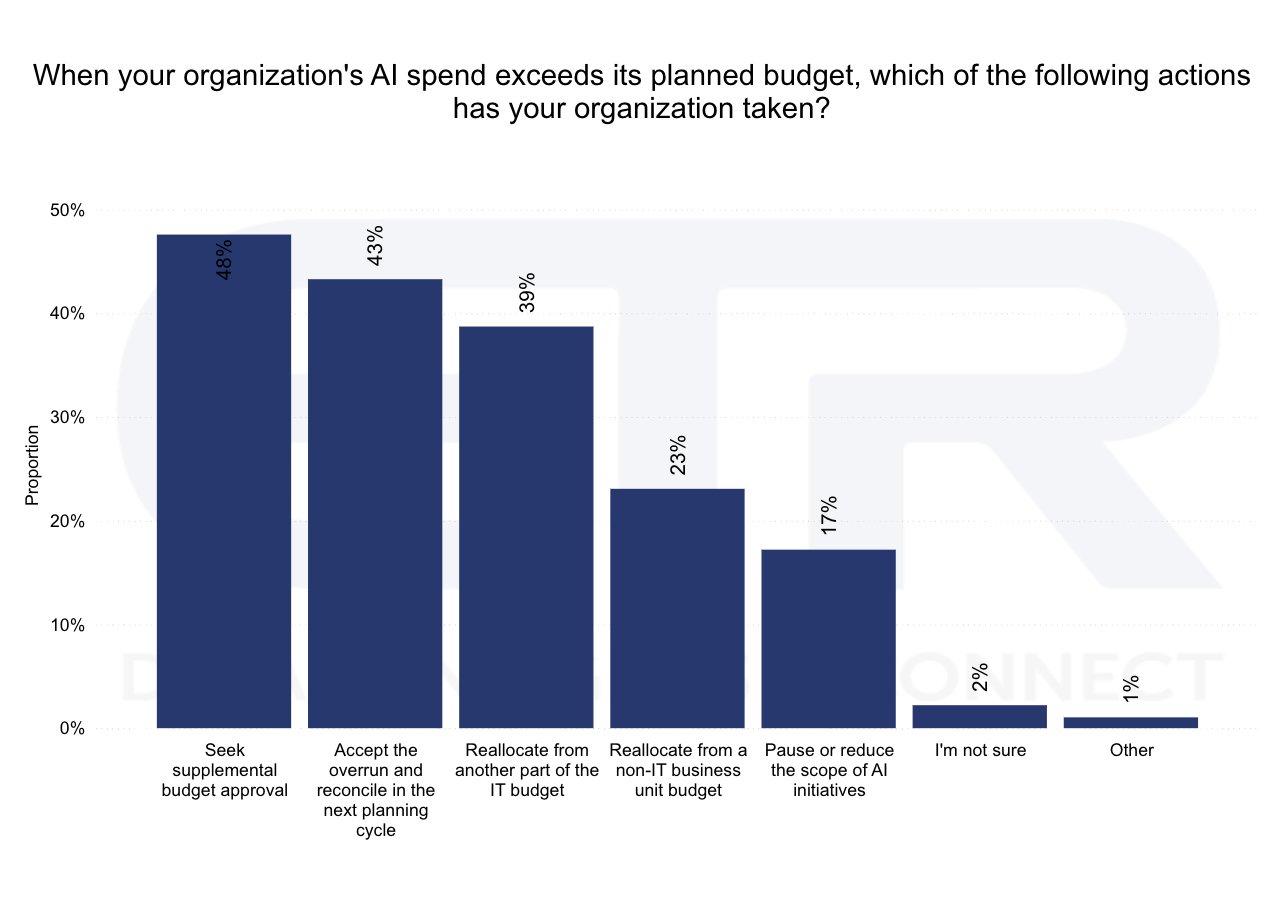
When AI runs over budget, 48% seek supplemental approval and only 17% pause or scale back initiatives.
-
AI overruns are funded by cutting external contractors (61%), legacy infrastructure (49%), and non-AI software licenses (36%).
-
Cybersecurity remains protected: just 18% pull from security budgets, and security leads software spending growth at 7.8%.
Enterprise AI has cleared the adoption hurdle. What it has not cleared is the budgeting hurdle. In ETR's Summer 2026 Macro Views Survey, nearly half of organizations report AI spending running over plan, and the way they respond to those overruns says more about AI's priority status than any sentiment index could.
What Is the Macro Views Survey?
The Macro Views Survey is a recurring survey from ETR that captures forward-looking enterprise IT budget expectations, pricing trends, AI deployment strategies, and organizational priorities directly from the people who set and manage those budgets. The Summer 2026 iteration was fielded from June 2 to July 5, 2026, and drew 1,636 technology leaders, including 275 from Fortune 500 and 393 from Global 2000 organizations.
How Fast Is IT Spending Growing in 2026?
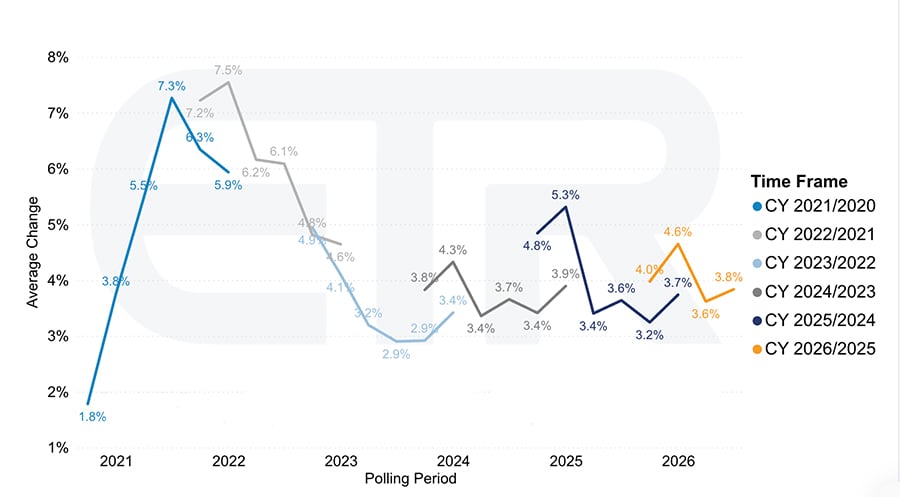
IT spending is still growing. Calendar year 2026 spending growth estimates ticked up to +3.8% this survey, from +3.6% in Spring 2026, with 72% of respondents planning to increase spend, led by Small and Midsize organizations, the Energy/Utilities vertical, and the APAC region. That said, the +3.8% figure remains below the +4.6% captured in the Winter 2026 survey, a reminder that budgets are expanding with more caution than the year began with.
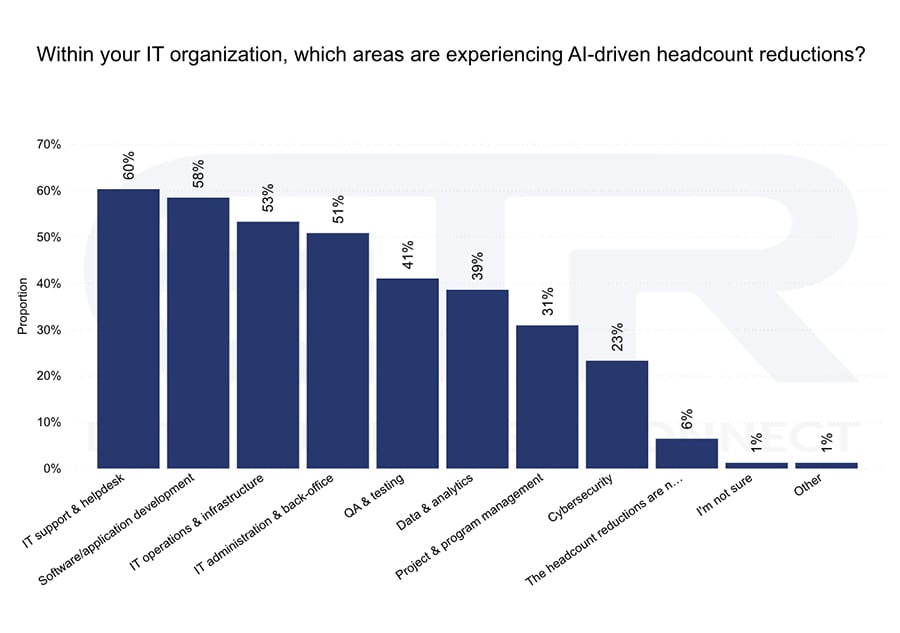
Against that restrained backdrop, AI keeps taking a larger share of the pie. AI adoption is now near universal: just 4% of respondents say they are not leveraging AI, down from 10% in Summer 2025. Three-quarters (75%) cite AI for workforce productivity, and the staffing impact is measurable. Limiting future headcount (34%) and strategically reducing headcount (20%) both hit their highest levels to date. Among those reporting AI-driven headcount reductions, IT support and helpdesk roles are most exposed at 60%, followed by software development (58%), IT operations (53%), and IT administration and back office (51%), while cybersecurity (23%) remains least affected.
Are Enterprises Building or Buying AI?
How enterprises consume AI remains nearly evenly divided: 31% lean entirely or mostly on direct GenAI and LLM usage, 30% lean on embedded vendor offerings, and 23% report equal usage of both. On returns, however, a gap is emerging. Sustained ROI at scale is now more common for in-house AI builds (16%) than for vendor solutions (13%), and the share citing no traction for in-house building has declined for three consecutive surveys.
How Many Organizations Are Over Budget on AI?
Here is the governance gap: 47% of organizations report AI spend running moderately or substantially over plan. Just 6% came in under budget, and 10% have no formal AI budget to measure against at all. Three years into the GenAI era, a meaningful share of the enterprise is still spending on AI without a yardstick.
What happens when the overruns hit is the more telling data point. Among respondents whose AI spend exceeded plan, 48% seek supplemental budget approval, 43% accept the overrun and reconcile it in the next planning cycle, and 39% reallocate from elsewhere in the IT budget. Only 17% pause or scale back AI initiatives. When the bill comes in high, organizations overwhelmingly choose to keep paying rather than pull back. AI is behaving like a must-fund priority.
Which IT Budgets Get Cut to Fund AI Overruns?
Among organizations reallocating budget to cover AI overruns, the cuts land in specific places: external contractors and consultants (61%), legacy infrastructure modernization and hardware refresh (49%), and non-AI software licenses (36%). Internal headcount budgets take a hit for 28%.
Within software specifically, IT operations and monitoring tools (47%) and productivity and collaboration tools (46%) are the most cited categories to harvest from. Cybersecurity is the outlier: just 18% pull budget from security to fund AI overruns, consistent with security's position as the top-growing software category this survey at 7.8%.
The Investor Takeaway
AI budget capture is real, and it is funded at the expense of other IT categories. The spending data points to a redistribution with identifiable losers: IT services and contractor-heavy business models, legacy infrastructure refresh cycles, and non-AI software categories like IT operations tooling and collaboration seats.
Security sits on the protected side of that ledger, leading software spending growth at 7.8% while facing the least reallocation pressure and the least AI-driven headcount exposure.
The efficiency signal extends beyond AI line items. Overall seat count growth remains muted at 2.7%, with Sales, Finance, and HR software seats declining for a second consecutive survey, and increased staffing fell to a survey-low 6% as a method for expanding IT spend. Taken together with the in-house ROI edge, the data is consistent with budgets shifting toward automation and internal capability over headcount and seat expansion.
For investors, the signal is less about whether AI budgets grow and more about which line items fund that growth. The Summer 2026 data names them.
Get the full picture. The complete Macro Views July 2026 Findings Report covers IT spending by category and vertical, hardware and software pricing trends, build versus buy ROI, and sector-level Net Score movements. Complete the form below to download the summary and gain access to the complete report.